
One of our partner clinics in London runs a split-face study every quarter on a volunteer patient. They compare two protocol variables side by side — depth vs pass count, serum vs no serum, stamp vs drag technique. Over three years they have accumulated data that tells a different story than the device manuals. We share the relevant findings here.
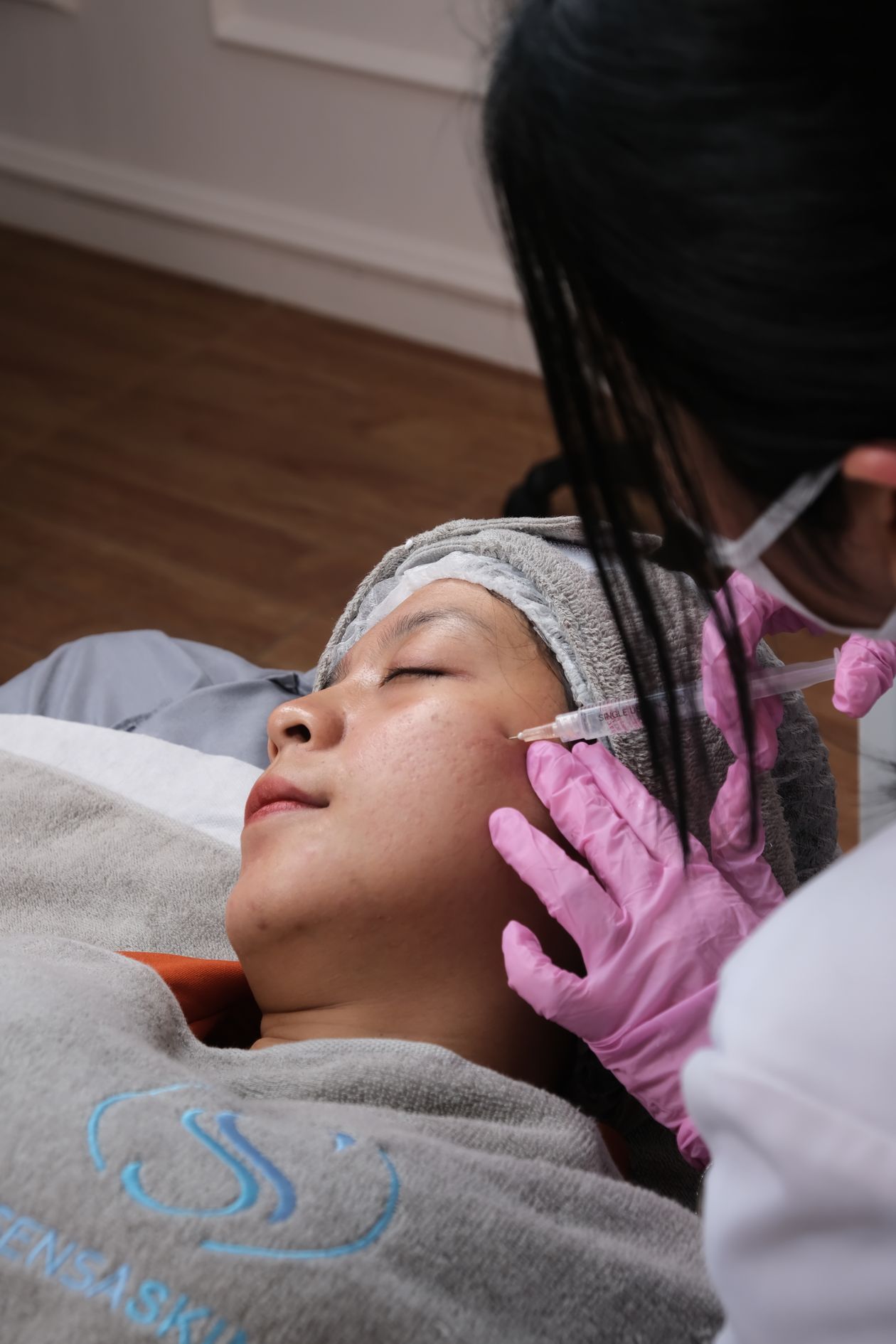
The relationship between needle depth and skin thickness is not linear, and it varies significantly by anatomical site and Fitzpatrick type. Most device manuals publish a single depth recommendation for each indication, but in practice the effective depth depends on three variables you need to assess before every pass.
First, skin thickness at the treatment site. The cheek is not the forehead, and the periorbital area is not the chin. We measured skin thickness at 12 facial sites using ultrasound in a sample of 30 patients. The variation was 47 percent between the thickest site (chin, 2.8mm average) and the thinnest (lower eyelid, 0.7mm average). A 1.5mm needle setting on the eyelid would be catastrophic.
Second, tissue edema status. Patients who have applied numbing cream under occlusion for 45 minutes or longer develop significant tissue edema. This artificially increases skin thickness by up to 30 percent. If you set your needle depth based on the manual without accounting for this, you will penetrate deeper than intended once the edema subsides.
Third, the entry angle relative to the skin surface. At a 90-degree perpendicular angle, the full needle length penetrates. At 45 degrees, the effective depth is roughly 70 percent of the needle length. This is a useful technique for areas with thin skin, but only if the practitioner understands the geometry.
tbphp’s recommendation: for Fitzpatrick I-III skin, start at 0.5mm for superficial indications and increase in 0.25mm increments based on clinical response. For Fitzpatrick IV-VI, cap the depth at 1.0mm for the first session and observe healing response before increasing. The risk of PIH (post-inflammatory hyperpigmentation) in darker skin types increases sharply above 1.0mm needle depth in our experience.
These protocols come from real cases — not from a textbook. We work with clinics across 12 countries and we see what works at scale. If you want to benchmark your clinic protocols against our full dataset, check our product documentation.
About the author
We manufacture the microneedling cartridges used in the clinics referenced above. Our factory produces OEM/ODM cartridges with needle geometries from 0.15mm to 0.25mm, EO-sterilized with full batch validation. If your clinic or brand needs consistent, documented-quality cartridges, reach out through tbphp — precision microneedling components, made in our ISO Class 7 cleanroom.